

Scrum is more than just a framework; it’s a way of working that helps teams stay focused, adaptable, and productive. If you’re managing a project or leading a team, understanding Scrum workflow is crucial to ensuring that work gets done efficiently while staying aligned with business goals.
In essence, Scrum is built around short, focused cycles called sprints, where teams plan, execute, and review their work in a continuous loop. This iterative process allows teams to quickly respond to changing requirements and gather feedback that drives improvement.
For project managers, understanding how Scrum’s workflow operates—from planning the work to reflecting on what went well (and what didn’t)—is key to keeping teams motivated and projects moving forward.
In this article, we’ll break down each component and offer practical insights on how to create a workflow that works for your team. Whether you’re new to Scrum or looking to refine your approach, this guide will help you get the most out of the Scrum process.
What is Scrum?
Scrum is a framework within the Agile methodology, primarily used for managing software development projects. However, its principles are universally applicable to any complex, adaptive work.

It was originally introduced to software development by Jeff Sutherland and Ken Schwaber in the early 1990s and has since become one of the most popular frameworks for delivering high-quality products in an iterative manner.
The foundation of Scrum lies in three key elements:
- Roles: Scrum defines three essential roles for team success: the Scrum Master, the Product Owner, and the Development Team.
- Artifacts: Scrum relies on three key artifacts: the product backlog, the sprint backlog, and the increment.
- Ceremonies: Scrum emphasizes the importance of specific events or meetings, including sprint planning, daily scrum, sprint review, and sprint retrospective.
These components come together to form a workflow that drives the team through cycles of planning, execution, review, and reflection. The Scrum workflow is iterative, meaning it continuously loops through these stages until the project is completed or the product is ready for release.
Overview of the Scrum workflow
The Scrum workflow is designed to be simple yet effective, facilitating continuous improvement through regular cycles called Sprints. A Sprint is a fixed time period, typically between 1 to 4 weeks, during which a team works to complete a set of tasks or goals. The beauty of Scrum lies in its flexibility—teams can constantly refine their processes based on feedback and results.
The general flow of a Scrum project can be broken down into the following stages:
- Sprint Planning: The team defines what will be accomplished during the Sprint.
- Daily Scrum: The team holds a brief daily meeting to discuss progress, challenges, and align on the next steps.
- Sprint Execution: The team works on completing tasks, with a focus on delivering potentially shippable product increments.
- Sprint Review: At the end of the Sprint, the team reviews the completed work with stakeholders.
- Sprint Retrospective: The team reflects on the Sprint to identify improvements for the next cycle.
This iterative process helps teams stay focused, adapt to changing requirements, and continuously improve their workflows to increase productivity.
Key components of the Scrum workflow
Understanding the key components of the Scrum workflow is crucial for project managers aiming to implement or refine Scrum in their teams.
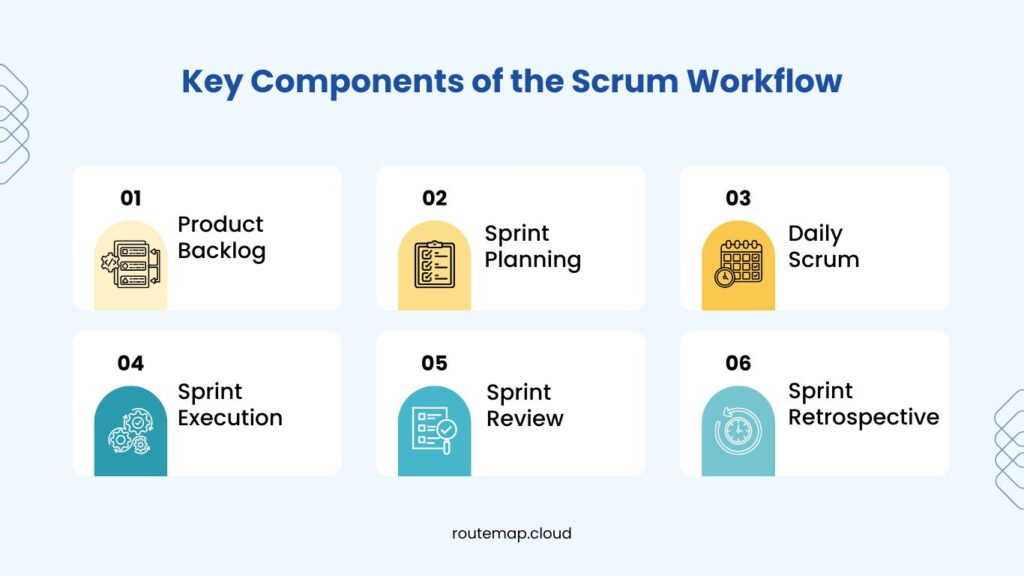
1. Product backlog
The Product backlog is a dynamic, prioritized list of all the features, enhancements, bug fixes, and tasks needed for the product. The Product Owner is responsible for maintaining and refining the backlog. They work closely with stakeholders to ensure that the backlog reflects the most valuable work to be completed.
The backlog is constantly evolving as priorities change, new insights are gained, and feedback from previous Sprints is incorporated. For the Scrum team, a well-maintained backlog is essential to ensure they are working on the most important tasks.
2. Sprint planning
The sprint planning meeting is a critical event in Scrum, where the team selects which tasks from the product backlog will be worked on during the upcoming Sprint. The goal of sprint planning is to define a clear set of goals and deliverables, breaking down tasks into actionable items that can be completed within the Sprint’s time frame.
During this meeting, the Product Owner presents the highest-priority items from the Product Backlog, while the development team estimates the effort required to complete each task. This collaborative process sets the direction for the entire Sprint.
3. Daily Scrum
The Daily Scrum, or Daily Standup, is a brief (typically 15-minute) meeting that occurs every day during the Sprint. It provides an opportunity for the team to synchronize and align on their work. Each team member answers three key questions:
- What did I accomplish yesterday?
- What will I work on today?
- Are there any blockers or challenges preventing me from making progress?
The Scrum Master facilitates this meeting, ensuring that it stays focused and productive. The Daily Scrum is vital for maintaining momentum, identifying issues early, and fostering communication within the team.
4. Sprint execution
During the sprint execution phase, the team works collaboratively to complete the tasks outlined in the sprint backlog. The goal? It is to deliver a potentially shippable product increment by the end of the Sprint.
This phase involves intense collaboration, problem-solving, and adaptation to ensure that the team can meet the Sprint goals. The Scrum Master supports the team by removing any blockers that might hinder progress, ensuring that the team can work effectively.
5. Sprint review
At the end of each Sprint, the team conducts a sprint review to demonstrate the work they’ve completed. The team presents the product increment to stakeholders, gathers feedback, and discusses any necessary adjustments. This is an opportunity to assess whether the Sprint goals have been met and whether the product is on track.
The Sprint Review is an essential part of Scrum because it allows the team to make adjustments based on real stakeholder feedback, ensuring that the project aligns with business goals.
6. Sprint retrospective
The sprint retrospective is a meeting held after the Sprint Review, where the team reflects on the entire Sprint. The focus is on identifying areas for improvement in the team’s processes, communication, and collaboration. The goal is to continuously improve the team’s performance and refine the Scrum workflow for future Sprints.
This ceremony fosters a culture of continuous improvement and self-awareness, helping the team learn from each Sprint and apply lessons learned to future work.
How to create a Scrum workflow that runs smoothly
A successful Scrum workflow doesn’t happen by accident—it requires thoughtful planning, regular adjustments, and clear communication. Here are some tips to help project managers create a smooth Scrum workflow:
1. Establish clear goals
For Scrum to work effectively, it’s crucial to have clear, well-defined goals for each Sprint. The Product Owner should work closely with stakeholders to set priorities that align with the project’s overall vision.
In return, the team should focus on achieving these goals within the Sprint.
2. Maintain a well-prioritized product backlog
A product backlog that is constantly updated and well-prioritized ensures that the team is always working on the highest-value tasks. Regular grooming sessions, where the team reviews and re-prioritizes the backlog, help ensure that the work being done is always aligned with business needs.
3. Facilitate communication and collaboration
Effective communication is the cornerstone of Scrum. For project managers, it is important to ensure that the daily scrum is efficient, the sprint review involves all relevant stakeholders, and the sprint retrospective encourages open feedback.
Additionally, creating a culture of transparency and collaboration will help the team work more efficiently.
4. Use tools to visualize the workflow
Tools like Jira, Trello, or Routemap can help teams visualize their workflow, track progress, and keep everyone aligned. These tools are beneficial for remote teams because they provide a central place to monitor the project’s status in real time.
When to use Scrum workflow and its benefits
Scrum workflows are particularly effective in projects that require flexibility, frequent changes, and stakeholder feedback. Common use cases include:
- Software development: Scrum was initially designed for software projects, making it highly effective for managing development cycles.
- Product teams: Scrum works well for product teams that are working on evolving products with frequent iterations.
- Complex projects: Scrum is ideal for projects that involve complex or rapidly changing requirements, where traditional project management methods might struggle.
The benefits of using Scrum workflow include:
- Increased flexibility: Scrum’s iterative nature allows teams to adapt quickly to changes.
- Improved collaboration: Regular meetings and communication encourage team alignment and transparency.
- Higher productivity: The focus on short-term goals helps teams stay productive and deliver faster results.
- Continuous improvement: The retrospective process ensures that the team is always refining their processes for better efficiency.
Conclusion
Scrum is a powerful framework for managing complex projects, and its workflow is at the heart of its effectiveness. By focusing on continuous improvement, collaboration, and iterative delivery, Scrum enables teams to adapt to change, meet stakeholder needs, and deliver high-quality products.
For project managers, understanding and optimizing the Scrum workflow is key to driving successful outcomes. By following the principles outlined in this article, you can create a Scrum workflow that not only runs smoothly but also drives continuous value for your team and organization.